
Child and Parent Psychology.

How to Build Trust With Your Child: Why Children Need Support, Not Pressure
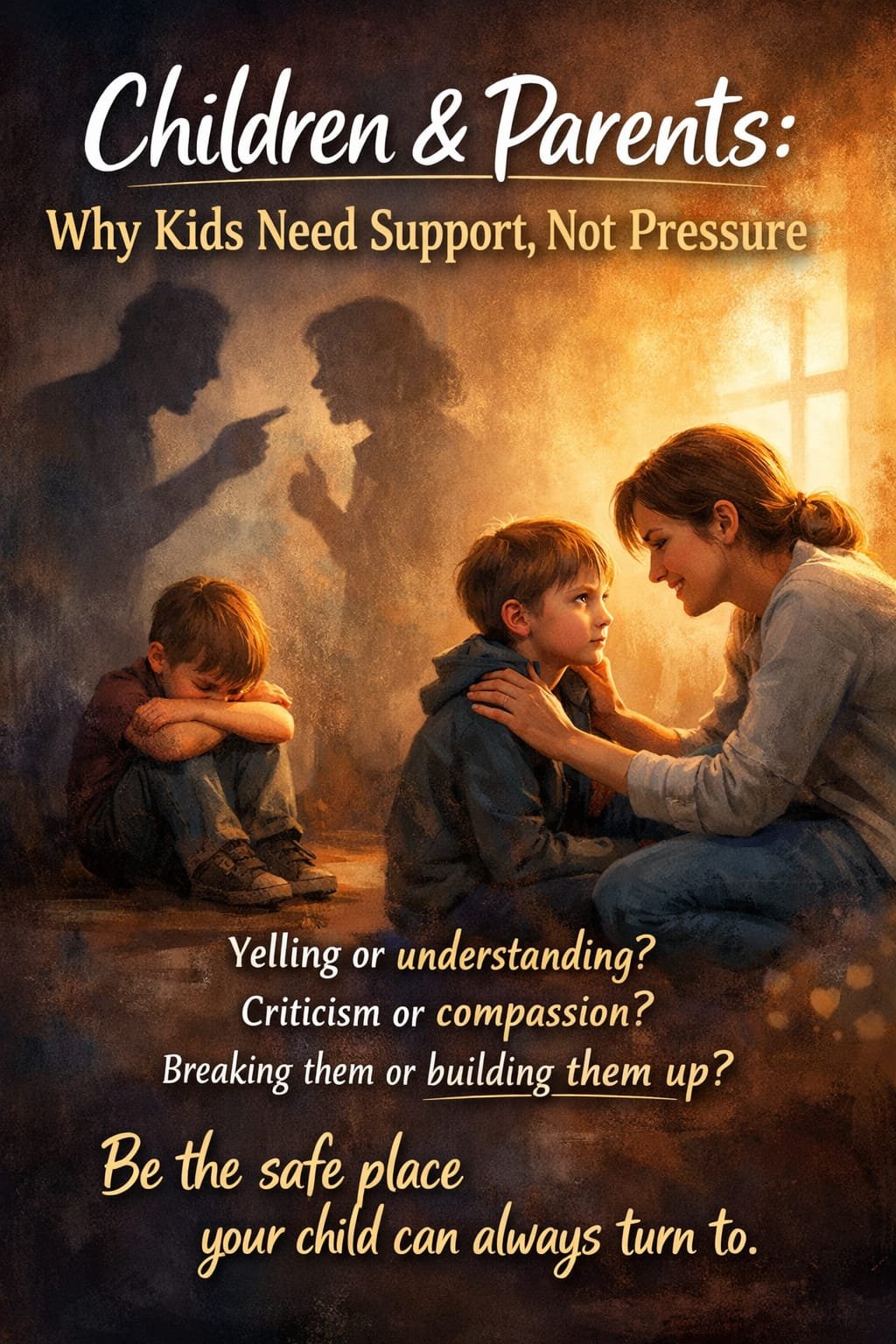
When a child is born, parents naturally begin thinking about how to raise them, protect them, and prepare them for life. But in the desire to do everything “right,” it is easy to overlook something even more important how a child feels, whether they feel safe, understood, and able to trust their parents.
Children do not come into this world already knowing how to deal with fear, disappointment, anger, or sadness. They learn through the people closest to them through our words, reactions, behavior, and the emotional atmosphere we create at home.This is why understanding how to build trust with your child is so important. Trust is not created through control or fear. It grows when a child knows that they can make a mistake, tell the truth, express difficult emotions, and still be loved and supported.
Parents often put pressure on children without realizing it. We want them to behave, succeed, stop crying, stop being afraid, or simply “listen.” But when a child constantly hears “don’t cry,” “stop being afraid,” or “you should know better,” they may begin hiding their feelings instead of learning how to understand them.Many children are not “difficult.” Sometimes they are simply overwhelmed by emotions they do not yet know how to manage.To better understand what may be happening inside a deeply feeling child, you can also read:
https://www.goodinside.com/blog/understanding-your-deeply-feeling-kid/
When children feel that their emotions are unwelcome, they may gradually stop sharing them. They can become quieter, more distant, or begin expressing their feelings through anger, resistance, or behavior that adults interpret as disobedience.
Building trust with kids begins with connection. A child needs to know: “I can come to you when I am scared. I can tell you when I made a mistake. I can be upset, confused, or angry and you will still listen to me. ”This does not mean allowing everything or raising a child without boundaries. Children need rules and guidance.
But healthy boundaries can exist together with empathy, respect, and emotional support. A parent's words can become a child's inner voice. Support can teach confidence. Understanding can teach empathy. And trust created in childhood can influence the relationship between parents and children for many years to come.
Sometimes the most powerful thing we can give a child is not another lesson about how to behave but the certainty that they are heard, understood, and never alone with their feelings.