
Reading for Children.
Why Reading Books Is Important for a Child’s Thinking, Imagination, and Soul
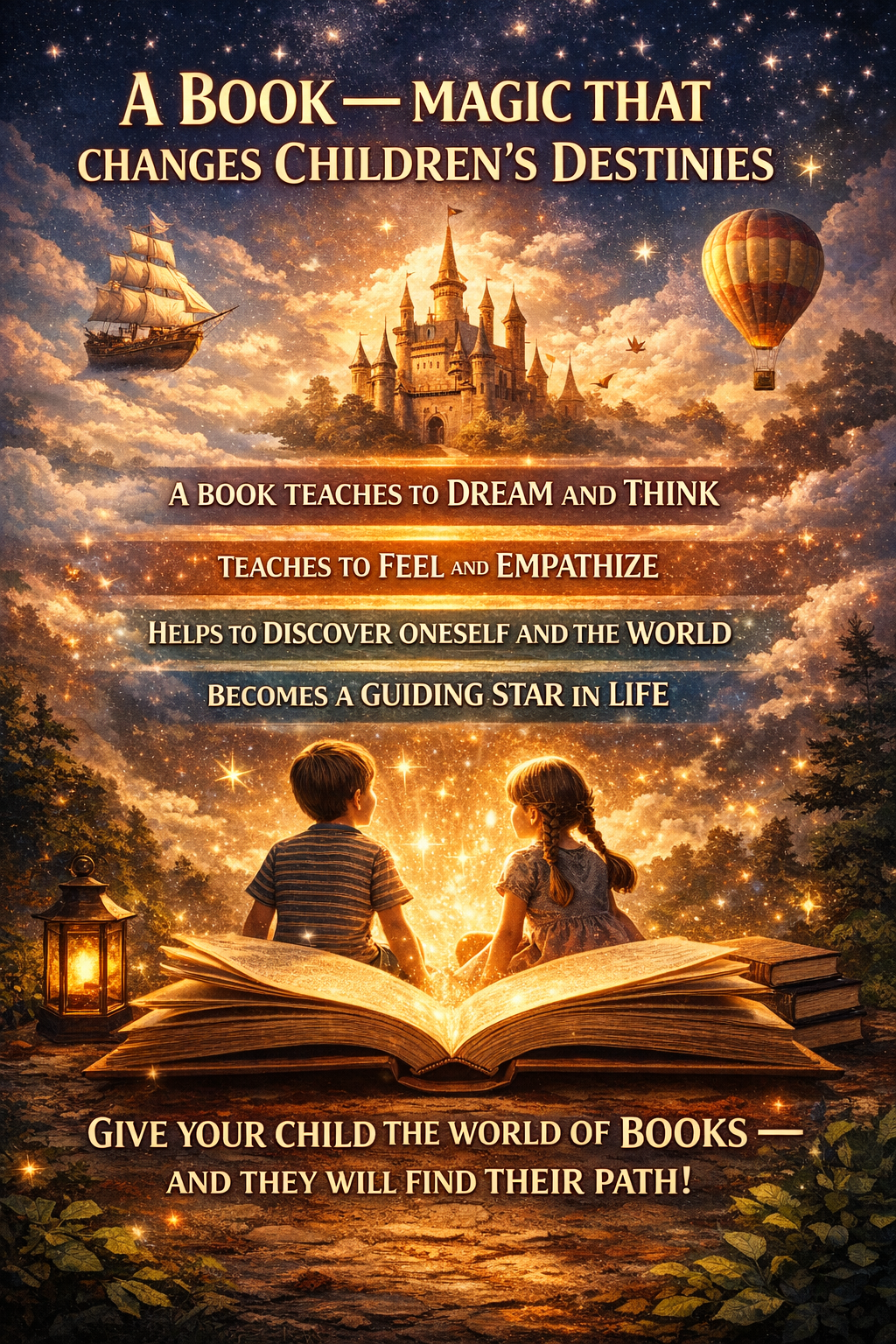
Books open an amazing world of knowledge, emotions, and imagination for children. Reading for children helps them discover new words, explore interesting stories, understand themselves, and recognize the feelings of others. Through the actions of fictional characters, children gradually learn to distinguish good from evil, truth from lies, responsibility from indifference.
While reading, children imagine characters, events, and entire worlds. This process actively develops their imagination, memory, attention, and thinking. Children learn to analyze events, empathize with characters, reflect on their decisions, and independently search for answers to important questions.
Books also help children understand their own emotions. By reading about joy, fear, friendship, disappointment, courage, and hope, children recognize familiar feelings and understand that experiencing them is completely natural. This develops empathy, emotional stability, and confidence.
Reading together is especially important for a child’s development. The voices of parents create a feeling of calm, trust, and safety. By discussing a story, adults help children express their thoughts, ask questions, and form their own opinions. These moments strengthen the emotional connection within the family and create warm memories.
We also invite you to read our article about emotional development in children. Click here to learn why emotional intelligence is important for children and how parents can teach them to understand their feelings, show compassion, cope with stress, and build healthy relationships with others.
Today, books often give way to phones, tablets, and short videos. Screens quickly attract attention, but they do not always develop the ability to think and feel deeply. A book requires concentration and active participation. Children do not simply receive ready made images. They create these images within their own imagination.
Regular reading expands a child’s vocabulary, improves speech and literacy, encourages curiosity, and supports learning. Books introduce children to different people, cultures, and life situations. As a result, children become more attentive, kind, independent, and open to the world around them.
It is important to allow children to choose books that match their age and interests. When reading brings joy, a book no longer feels like an obligation and becomes a source of inspiration. Even a few pages read every day can gradually create a valuable and lasting habit.
Every book can become an important step in the development of a child’s personality. Read with children, discuss stories, and listen carefully to their opinions. A love of reading developed in childhood can become a reliable source of support, contribute to education, and remain with a person throughout life.